By Sergio
September 4, 2026
A well-designed patio does more than create a place for outdoor furniture. It also has to work with the existing landscape, manage rainwater, and remain stable through changing weather. That is why patio builders pay close attention to grading before installing the finished surface. Proper grading helps determine where water will go, how the patio will meet the surrounding yard, and how well the finished space will perform over time.
Understanding the Importance of Proper Grading
Grading refers to shaping and leveling the ground so water moves in the intended direction. A patio may look level to the eye, but it typically needs a slight slope to keep rainwater from sitting on the surface. Patio builders evaluate the existing grade, nearby structures, soil conditions, and other landscape features before determining how the finished patio should be positioned.
The goal is not simply to make the ground slope. The goal is to create a controlled path for water while maintaining a comfortable, usable surface. Too little slope can leave water standing on or around the patio, while too much slope can make the space feel awkward and difficult to use.
Grading also has to account for the relationship between the patio and the rest of the property. A patio may need to transition smoothly to a lawn, garden bed, walkway, retaining wall, or other hardscape feature. These connections are easier to manage when the grade is considered as part of the overall outdoor design rather than as a separate step.
According to the University of Illinois Extension, patios have a desirable slope of about 1%, with a maximum recommended slope of 2%. This relatively gentle range illustrates why precision matters. The surface needs enough slope to encourage drainage without creating an uncomfortable or overly steep area.
Protecting the Patio and Surrounding Property
One of the primary reasons grading matters is water management. Rain naturally follows the path of least resistance, so an improperly graded patio can collect water in low areas. Pooled water can make the surface unpleasant to use and may contribute to problems around the patio and surrounding landscape.
Before construction begins, patio builders can assess how water currently moves across the property. They may need to consider downspouts, nearby slopes, existing drainage patterns, and the location of the home. Understanding these factors helps the finished patio work with the property's natural conditions instead of directing water toward areas where it could create problems.
Proper grading is also closely connected to the stability of the patio itself. A finished surface depends on a properly prepared base beneath it. If the underlying area is uneven, poorly compacted, or exposed to unwanted water movement, the finished patio may be more vulnerable to shifting, settling, or uneven areas.
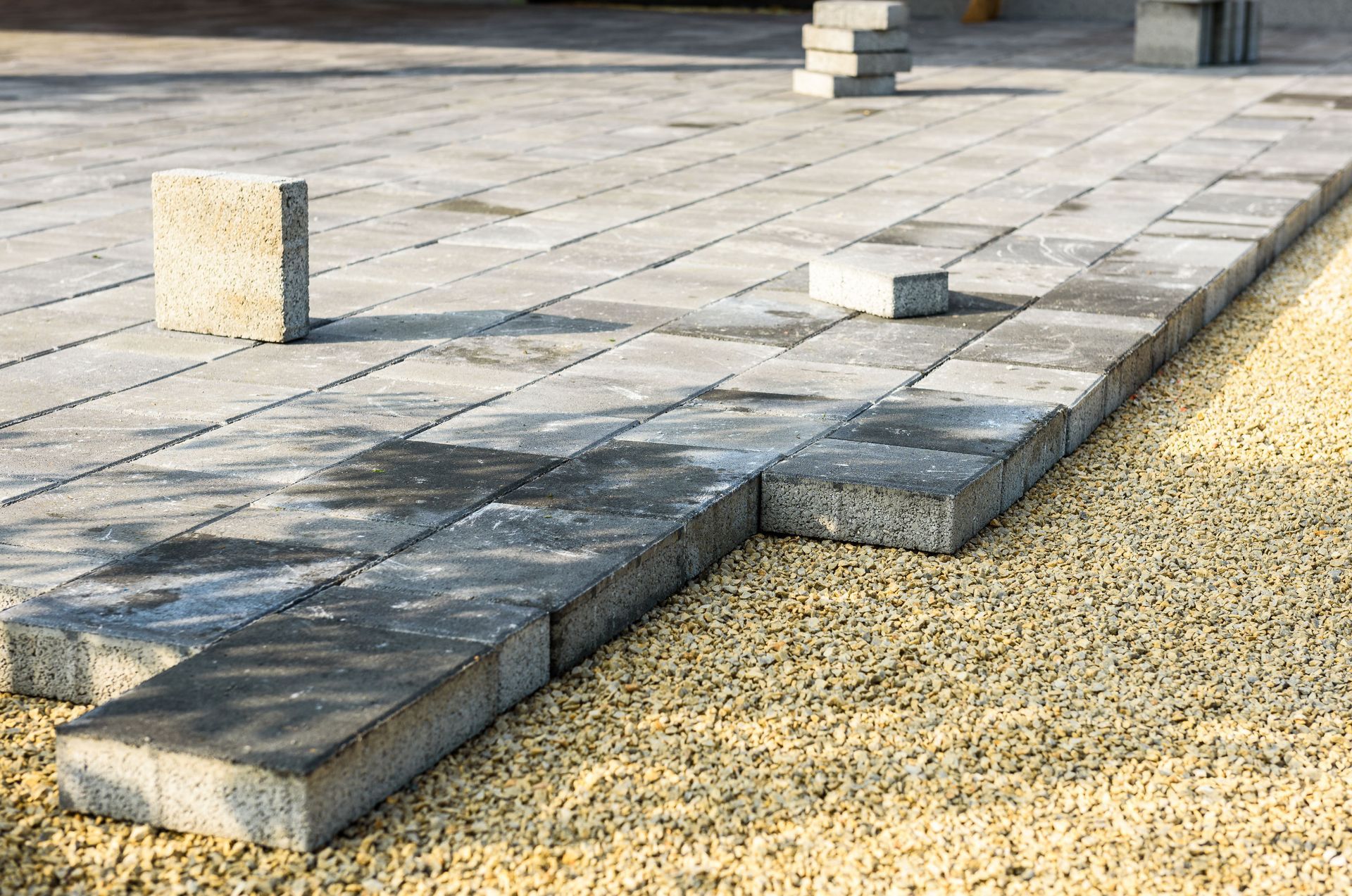
Patio builders pay attention to the grade before placing base materials because the foundation of the project affects the surface above it. A carefully prepared area provides a more consistent starting point for installing pavers, natural stone, concrete, or other patio materials.
Water management is especially important beneath and around hardscape surfaces. When water is allowed to collect where it should not, the surrounding soil can become saturated or move over time. Addressing grading during construction helps reduce the likelihood that drainage issues will undermine the finished surface.
Grading also does not stop at the edge of the patio. The patio's position and slope can affect nearby parts of the property, including the home, walkways, planting beds, and retaining walls. Water should be directed away from structures when the site's design and drainage plan call for it.
Managing Slopes and Elevation Changes
Not every yard provides a naturally flat area for a patio. Sloped properties may require more planning to create a comfortable outdoor living area. Changes in elevation can influence the patio's shape, access points, retaining features, and connections to other parts of the yard.
On a sloped property, grading may involve balancing several goals at once. The finished patio needs to provide a practical surface while also fitting the existing terrain and managing runoff. In some cases, retaining walls or other hardscape features can help create usable areas and manage changes in elevation.
A Stone Flake's website notes that retaining walls can add structure to sloped areas, help manage erosion, and create more usable sections of a property. When combined with patios and other hardscape features, these elements can help create a more cohesive outdoor layout.
The relationship between the patio and nearby structures is also important when dealing with changes in elevation. The finished elevation needs to work with existing doorways, steps, foundations, and other fixed points. A poorly planned grade can create awkward transitions or encourage water to move toward the structure.
A thoughtful grading plan considers the patio as one part of the property's larger drainage system. Instead of focusing only on the surface being installed, the crew looks at how that surface will interact with everything around it.
Planning for a Successful Installation
Grading is not something that should be treated as an afterthought once the patio materials arrive. It is part of the preparation process that helps determine the final elevation, slope, and relationship between the patio and its surroundings.
Before installation, patio builders can consider several factors:
- The existing slope and elevation of the yard
- The location of the home and other structures
- Existing drainage patterns and downspouts
- The planned patio material and design
- Connections to lawns, gardens, walkways, and other hardscape features
- Areas where retaining walls or drainage solutions may be needed
Considering these details early can help prevent unnecessary adjustments later. It also gives the project a clearer direction from the beginning.
A patio needs to drain properly, but drainage should not come at the expense of comfort. A surface that slopes too aggressively may be less convenient for placing furniture, walking, dining, or relaxing. The challenge is creating enough slope for water to move while keeping the space functional.
This balance is one reason experienced patio builders focus on precise measurements rather than relying only on visual judgment. Even a subtle difference in elevation can affect how water moves across a surface.
Good grading is ultimately an investment in the performance of the entire patio. While it may not be the most noticeable part of the installation, it plays an important role in how the finished space handles rainwater, connects with the yard, and supports its surface materials.
Creating a Functional Outdoor Space
A successful patio project starts below the finished surface. The visible pavers, stone, or concrete are only part of the installation. The underlying preparation, grading, drainage, and transitions all contribute to how the finished area performs.
By evaluating the property before construction and carefully planning the grade,
patio builders can create outdoor spaces that manage water more effectively and integrate naturally with surrounding landscape features. This approach is especially valuable for properties with slopes, drainage concerns, or multiple hardscape elements.
A properly graded patio can provide a stable, comfortable foundation for outdoor dining, entertaining, relaxing, and everyday use. It can also complement other features, such as walkways, gardens, fire pits, and retaining walls, to create a cohesive outdoor environment. When you are ready to plan a patio that combines thoughtful grading with quality hardscaping, contact A Stone Flake to discuss your outdoor project.